
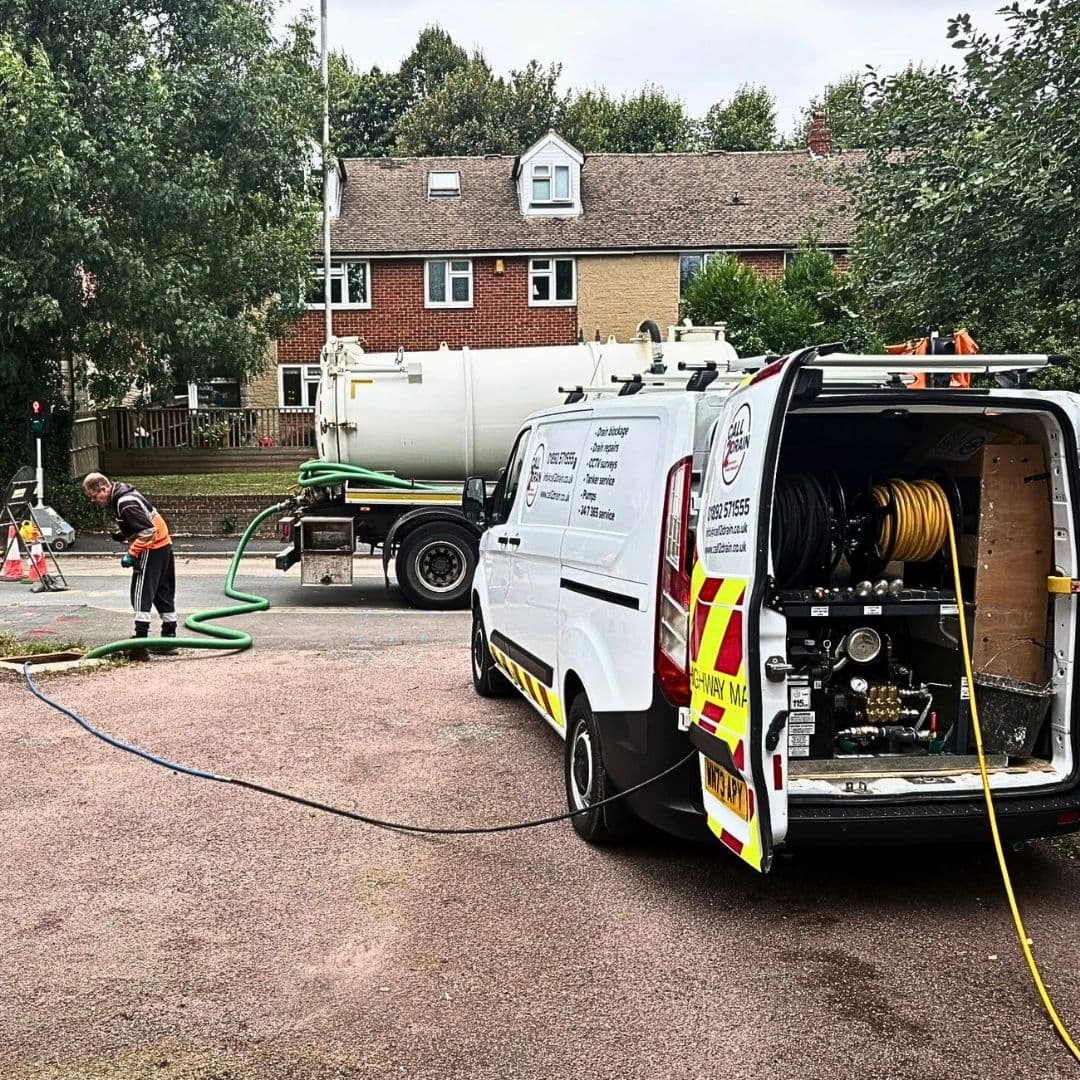
Know your enemy. Understanding what causes most blockages is the first step toward preventing them in your home or business, saving you from the stress of an emergency.
Blockages rarely happen overnight; they are usually the result of gradual accumulation over weeks, months, or even years. When the water finally stops flowing, it's often the 'straw that broke the camel's back'. Here are the top 5 culprits our engineers find on a daily basis across the South East.
1. Fat, Oil, and Grease (FOG)
As mentioned in our maintenance guide, grease is the #1 enemy of drainage flow. It acts as a industrial-strength glue, catching every hair, soap bubble, and food scrap that goes down the sink. Eventually, this forms a hard, waxy substance that can be as tough as concrete. Prevention is simple: never pour grease down the sink. Wipe your pans with a paper towel and use a food trap to catch any solids.
2. Tree Root Ingress (The Hidden Intruder)
Trees are amazingly persistent. Their tiny root 'hairlines' can detect the moisture and nutrients inside your pipes from several meters away. They find their way in through microscopically small cracks or gaps in pipe joints (especially in older clay pipes). Once inside, they feast on the wastewater and grow rapidly, creating a dense, fibrous 'root mass' that completely bridges the pipe. This traps paper and waste, leading to a total backup. Annual CCTV checks are the only way to catch this before the roots break the pipe entirely.
3. Foreign Objects (The Unexpected Guests)
From children's toys and mobile phones to wedding rings and bathroom air fresheners, we've found it all. Often, these items snag in a bend or a joint, and then toilet paper begins to build up behind them. Using drain guards in all sinks and ensuring children understand that the toilet isn't a 'portal' for toys is essential. If you drop something precious down the drain, call us immediately—we can often retrieve items using our camera and specialized grabber tools before they are washed into the main sewer.
4. Mineral Scale Build-Up
The water in Kent and Sussex is famously hard. This means it's full of minerals that, over decades, deposit themselves on the internal walls of your pipes. This scale build-up narrows the effective diameter of the pipe and creates a rough, sandpaper-like surface. Debris that would usually wash away easily instead gets snagged on the scale, starting a blockage. Mechanical descaling or high-pressure water jetting is required to scour these deposits away and restore the smooth surface of the pipe.
5. Structural Collapse and Ground Movement
Sometimes, the blockage isn't caused by what's inside the pipe, but by the pipe itself. Older clay pipes can shift, crack, or collapse due to ground movement, subsidence, or even the weight of heavy vehicles like delivery trucks driving over them. When a pipe collapses, the flow is blocked by soil and rubble. This is a structural emergency and requires technical repair such as excavating or structural relining. If you notice localized sinking in your lawn or driveway, it could be a sign of a leaking or collapsed drain below.
Summary
Most blockages are a combination of several of these factors. For example, scale build-up makes it easier for grease to snag, which then catches hair and foreign objects. By understanding these causes, you can take proactive steps to change your habits and schedule regular maintenance. If you're experiencing slow-draining sinks or gurgling toilets, don't wait for the total blockage—call Call2Drain for a professional health check today.