An emergency checklist for blocked drains in Kent: what to do immediately, what to avoid, and when to call for jetting or CCTV.
A blocked drain can escalate quickly, especially when more than one outlet is affected or the backup starts to impact your property. If you need a practical emergency plan for Kent, this guide focuses on what to do in the first 30 minutes and how to avoid common “make it worse” actions.
Our aim is simple: help you reduce risk first, then choose the correct service path (emergency unblocking, diagnostics, or repairs).
First steps matter: avoid chemical guesswork and repeat re-blocking.
The First 10 Minutes
1) Stop using the affected outlet(s). Continued use can push debris deeper and increase pressure.
2) If sewage is backing up, keep people and pets away and avoid contact with contaminated water.
3) If safe, shut off any feeds to the blocked section (for example a toilet supply) to limit ongoing discharge.
What Not to Do
Avoid pouring unknown chemicals “because they might dissolve it”. In many cases, chemicals only treat symptoms and can create hazards or damage certain pipe materials.
Avoid repeated attempts to force the blockage further down the line. Even if you clear a small path, the residue often remains and the problem can return fast.
When to Call an Engineer for Emergency Unblocking
Call for professional emergency help when the backup is active, smells are strong and persistent, or it is affecting more than one outlet. For immediate clearance, see Emergency Drain Unblocking.
If It Keeps Happening: Choose Diagnostics
If the blockage is recurring, treat it as a diagnosis problem, not just an emergency-clearing problem. CCTV helps confirm whether the cause is FOG build-up, roots, scale, displaced joints, or structural issues.
Start with CCTV drain surveys so you can move to the right repair option with confidence.
Prepare So the Engineer Arrives Ready
Keep your address and postcode ready. Then tell us what you see: slow draining, gurgling, odours, external pooling, and whether it is getting worse quickly. If you can do so safely, note where the symptoms appear (sink, toilet, shower, external gully).
Safety First: Contamination and Where Not to Stand
During an emergency blocked drain situation, it’s possible for wastewater (and potentially sewage) to escape. If you can, keep children and pets away from the affected area and avoid walking through water that looks or smells like it could be contaminated.
If you notice active backups, strong odours, or wet surfaces rapidly spreading, treat the problem as a health-and-safety priority. Professional engineers will bring appropriate PPE and safe operating procedures for jetting, extraction and clearing.
A Simple Kent Checklist (You Can Follow Immediately)
- 01Stop using the affected outlet(s) right away to avoid pushing waste deeper.
- 02Ventilate the area if possible and avoid touching contaminated surfaces.
- 03If it is safe, shut off the feed to the blockage (for example toilet supply) to limit discharge.
- 04Note what is happening: slow drains, gurgling, foul odours, pooling outside, or multiple outlets affected.
- 05Take a few quick photos from a safe position if you can (do not put yourself at risk).
- 06Call a 24/7 drainage engineer and share the postcode/address and symptoms so dispatch can prepare the correct equipment.
Why Chemicals and DIY “Forcing” Can Increase the Cost
Many homeowners try chemicals because they appear to offer a fast fix. In reality, chemicals often treat symptoms and can create hazards or damage for certain pipe materials. They also tend to leave residue behind, which means the blockage may return quickly.
Similarly, repeatedly attempting to force a blockage further down the pipe can increase the chance of re-blocking. If the underlying cause is FOG build-up, roots, scale or a structural issue, clearing only the surface symptoms can be frustratingly temporary.
Aftercare: How to Reduce Repeat Blockages Once Cleared
Once your drain is unblocked, the next step is prevention. For kitchens, avoid pouring fats, oils and grease down the sink. For bathrooms, consider drain guards to reduce hair and soap-scum build-up. For external gullies, check that grates and channels are not full of silt after heavy rainfall.
If the issue returns soon after an emergency clear, don’t default back to the same temporary solution. Instead, use the diagnosis-first approach: CCTV drain surveys can identify what is actually causing the problem.
What Your Engineer Will Do When They Arrive
When our engineer attends a Kent blocked drain call-out, the first step is always understanding the symptoms and matching them to the likely cause. That means confirming which outlets are affected, whether it is a sudden emergency or a slow-developing issue, and what the waste looks or smells like when it backs up.
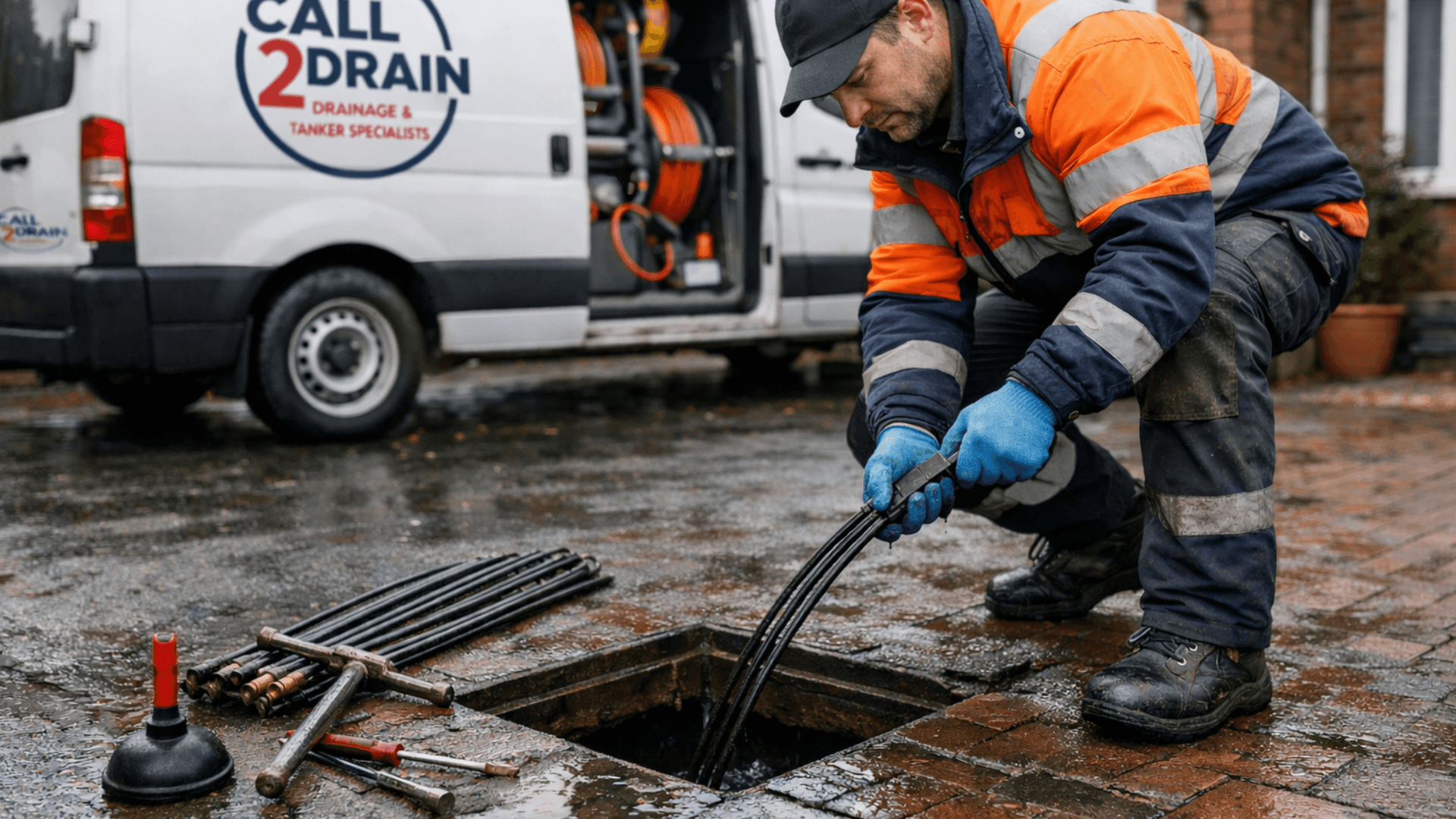
From there, we check the available access points and choose the right technology. High-pressure water jetting is often suitable when the blockage is grease, residue or general stoppage. If we suspect recurring faults or structural problems, CCTV is used to confirm what is happening underground before advising repairs. This is how you avoid the “clear today, pay again later” pattern.
- 01Clarify symptoms: single outlet vs multiple outlets, slow vs sudden, smells vs pooling.
- 02Assess safe access points and note any access limitations before work starts.
- 03Select the correct method (jetting, mechanical cleaning, extraction) for first-visit success.
- 04Carry out a flow check and explain findings in plain language.
- 05If it is likely to recur, recommend diagnostics or repairs (CCTV and no-dig options where suitable).
If you’re worried about damage while waiting for dispatch, focus on limiting usage rather than trying to force the problem deeper. When a drain is blocked, pressure and waste movement can increase rapidly. The best “pause” you can create is to stop adding waste, keep the affected area clear, and share accurate symptoms with dispatch.
Finally, once the blockage is cleared, don’t ignore the warning signs that it may be recurring. The difference between a one-off unblocking and a long-term fix is usually diagnosis. If your toilet/sink returns to the same symptoms quickly, CCTV can identify whether roots, grease build-up, scale, displaced joints or structural issues are the real cause.
If you’re not sure whether your situation is a simple unblocking or a deeper fault, use this quick decision rule: one outlet that clears and stays clear usually indicates a temporary stoppage. Multiple outlets, persistent foul odours, external pooling, or rapid re-blocking usually indicates residue build-up or a structural issue. In those cases, diagnosis-first is the fastest path to reducing cost over time.
One more practical tip for Kent homeowners: keep a short note of dates and symptoms. If the same issue returns (for example the same sink or toilet becomes slow again), that timeline helps the engineer explain whether it is likely FOG residue, root ingress, or a joint/pipe fault. With that context, the next visit can focus on what will stop recurrence instead of repeating emergency steps.
When you speak to dispatch, mention whether the problem happens after specific activities (for example after cooking, after guests, or after heavy rainfall). Linking symptoms to a pattern is one of the fastest ways to identify the cause and reduce the risk of repeat call-outs.
If you have to wait for dispatch, avoid running additional appliances into the affected system and keep towels and a bucket ready if water appears again. Quick, sensible actions reduce escalation while the engineer plans the right equipment.
Bottom Line
In Kent, the best way to protect your property during a blocked drain emergency is to act quickly, avoid chemical guesswork, and call for the correct technology. If it is recurring, switch to diagnosis-first so you solve the cause, not just the symptom.