
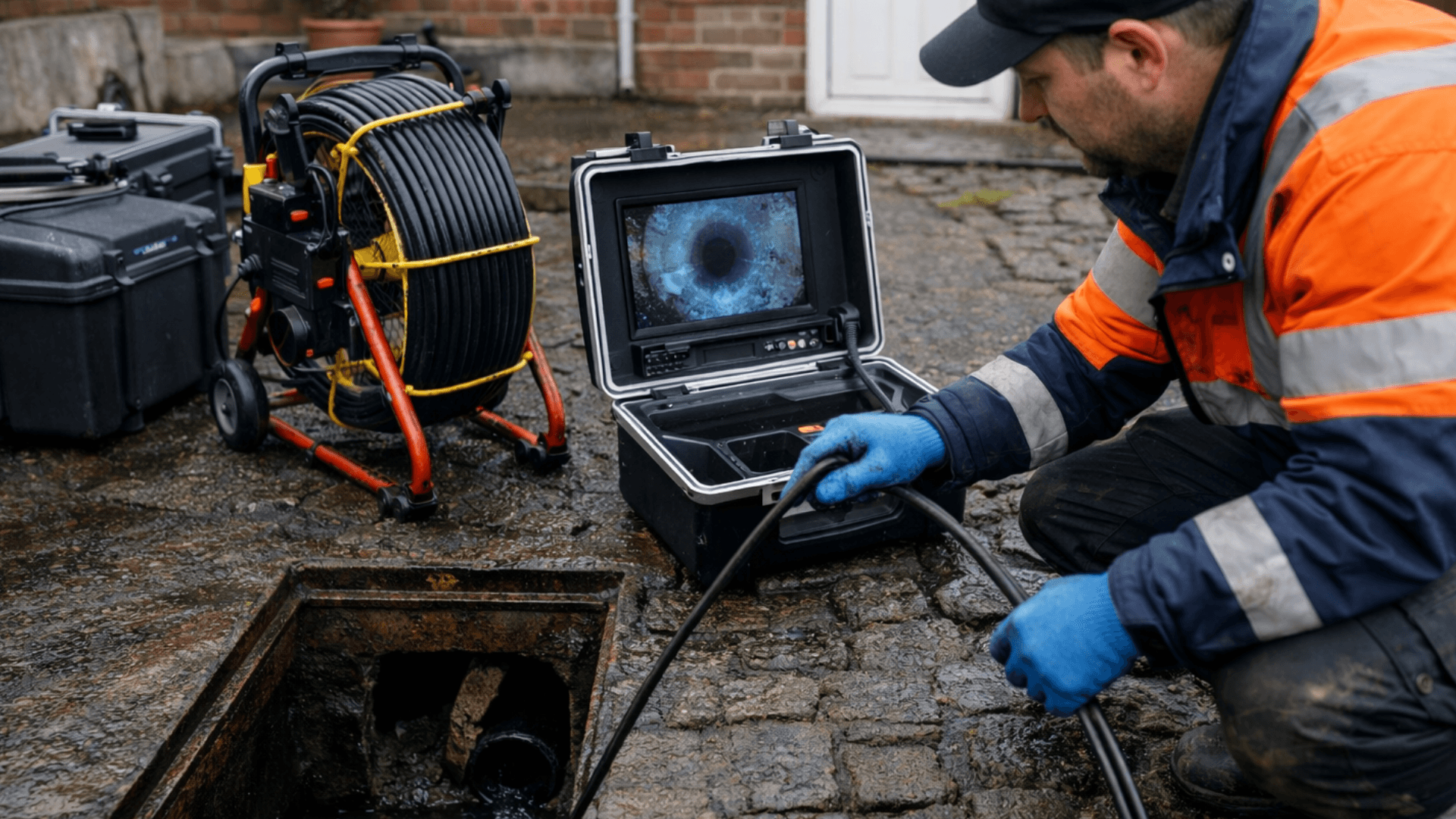
A Kent guide to CCTV drain surveys: what happens on-site, how long it takes, what you receive, and how to interpret common findings.
If your drain keeps blocking, you are probably tired of paying for clears that do not stop the problem coming back. A CCTV drain survey gives you the evidence to move from guessing to diagnosis, then to the correct repair plan.
In Kent and across the South East, Call 2 Drain uses CCTV crawler camera technology to inspect internal drainage networks and identify faults such as root ingress, displaced joints and internal build-up.
CCTV surveys reveal what is happening underground: roots, joints, scale and structural faults.
How the Survey Works (Step-by-Step)
1) On-site assessment
The engineer reviews the access points and discusses the symptoms you have noticed (for example slow drainage, gurgling, foul odours or recurring backups).
2) Camera deployment and navigation
A high-definition camera (often using a transmitter/sonde for locating) is inserted and navigated through the drainage network. The engineer records what they see so the report can be accurate and useful.
3) Findings and recommendations
After the inspection, you receive a clear report explaining observations and recommendations. This helps you choose the correct next step: unblocking, targeted cleaning, or repairs.
How Long Does a CCTV Survey Take?
Typical domestic surveys are often in the 60 to 90 minute range depending on site layout and what the camera encounters. Larger commercial networks vary based on complexity and access.
What Faults Do You Usually Find?
While every property is different, common findings include FOG and grease build-up, scale, tree roots, displaced joints, and sections where pipes appear compromised.
How to Use the Report (Home buyers, landlords, insurers)
CCTV is valuable for pre-purchase checks, planned maintenance and evidence-based repair decisions. If you want to move from diagnosis to repair, explore drain repairs & relining.
Ready to Book?
When you call, share where the issue occurs (toilet, sink, shower, external gully), what changed recently, and whether blockages are recurring. That helps the engineer prepare the right equipment and approach.
What You Should Receive in the CCTV Report
A good CCTV report is more than a list of images. It explains what the engineer observes in the pipe, how those observations relate to the symptoms you’re experiencing, and what the recommendations are. This is the part that helps homeowners, landlords and commercial facilities managers make confident decisions about repairs.
If the issue links to structural defects (for example displaced joints or root ingress), the report gives you evidence you can use for maintenance planning and, in some cases, pre-purchase or insurance conversations.
How CCTV Helps With Long-Term Drain Care
CCTV is ideal when you are dealing with recurring problems or when a drain keeps blocking after a previous clear. Instead of repeating the same process, the evidence-based approach helps you identify the cause and select the correct service path.
Common next steps after CCTV may include targeted jetting, mechanical cleaning, or moving into drain repairs and relining where no-dig methods are suitable.
CCTV FAQs (Kent)
Is a CCTV survey invasive or disruptive?
In most situations, CCTV uses existing access points (such as inspection chambers). That means it avoids unnecessary excavation and can help you move towards a repair without disturbing driveways or gardens.
Can CCTV identify roots and blockages together?
Yes. CCTV can often show root ingress, how far the problem extends, and whether there is associated residue or scale build-up contributing to repeated blockages. That clarity supports the right repair choice.
Do I need a survey if the drain is already fully blocked?
If the blockage is an isolated one-off event, an emergency unblocking may be enough. However, if the problem is recurring or suggests deeper fault patterns, CCTV helps confirm the cause so repairs can prevent the issue from coming back.
How We Interpret Findings (What You Actually Need to Know)
When we deliver CCTV surveys, the value is not only in the footage. The real benefit is translation: what the engineer sees inside the pipe, why it matches your symptoms, and what it means for the correct next step. We focus on practical explanation rather than technical jargon, because drain issues are stressful and you want clarity fast.
Depending on what the camera shows, the recommendations typically fall into a few groups: (1) clear and restore flow (when it is mainly residue or a stoppage), (2) targeted cleaning (when there is recurring build-up), or (3) repair planning (when there is structural risk, root ingress, or displaced joints). This is how CCTV turns uncertainty into a decision.
Common Findings in Kent and What They Usually Mean
FOG and grease build-up (residue thickening inside pipes)
Grease and oils often behave like a sticky “binder”. After it cools, it collects other debris such as hair and food particles. On CCTV, you’ll commonly see areas of reduced flow, residue accumulation, and build-up patterns that explain why the drain repeatedly blocks after showers or sink use. That usually points to a deeper jetting/cleaning approach and preventative aftercare.
Tree roots (ingress through joints or small gaps)
Root ingress typically starts through existing weaknesses. Over time, roots can bridge sections of pipe and trap more debris. CCTV can show how far roots extend and whether they’re associated with displaced joints or damaged pipe sections. That helps you choose the right repair approach rather than repeatedly clearing the same stoppage.
Displaced joints and structural defects
When joints shift, you can get step changes in the pipe, turbulence, or small catch points where waste builds up. CCTV often reveals where the joint is compromised and how severe it looks. If structural repair is appropriate, we can discuss no-dig relining options (where suitable) or alternatives if excavation is necessary.
Scale, mineral build-up and internal roughness
In many South East areas, including Kent, hard water can lead to scale deposits. On CCTV you may see narrowed sections, rough internal surfaces and residue patterns that increase friction and trap debris. The fix often involves descaling and restoration of full flow before the problem escalates into a complete blockage.
After you receive the report, the simplest way to decide what happens next is to match the recommendation to your symptoms. If the evidence shows mainly residue and a stoppage pattern, an unblocking/cleaning visit can restore function. If there is structural concern, root ingress, or recurring faults in the same zone, the report supports repairs and no-dig options where suitable. We’ll always explain what the report indicates, so you can act with confidence.
It also helps to think in terms of prevention. If CCTV shows grease or scale build-up, simple aftercare changes (especially in the kitchen) can reduce how often you see the same symptoms. If CCTV shows roots or displaced joints, prevention often involves targeted cleaning plus a repair plan that addresses the cause. The goal is always to reduce emergency call-outs and protect your drainage infrastructure.
If you are planning a purchase, extension, or insurance claim, keeping the CCTV report and any supporting notes can speed up conversations and reduce guesswork later. That means fewer surprises when the next drainage issue appears, because the evidence is already documented.
Internal Links: Match Your Symptoms to the Right Service
After diagnosis, the right service depends on the evidence. If you need clearance first, our unblocking page explains our approach. If you need repairs, explore drain repairs & relining. If the fault is structural and no-dig is suitable, relining may reduce disruption compared with excavation.