Cesspit emptying cost guide for Kent: the main price drivers, typical scheduling, and practical prevention steps to reduce overflow risk.
Cesspits (sealed holding tanks) store waste until they are emptied by tanker. Unlike septic tanks, cesspits do not treat wastewater for discharge through a drainage field. That is why many cesspits need more frequent emptying.
If you are looking at cesspit emptying cost in Kent, this guide explains what affects price, what warning signs to watch for, and how to reduce overflow risk.
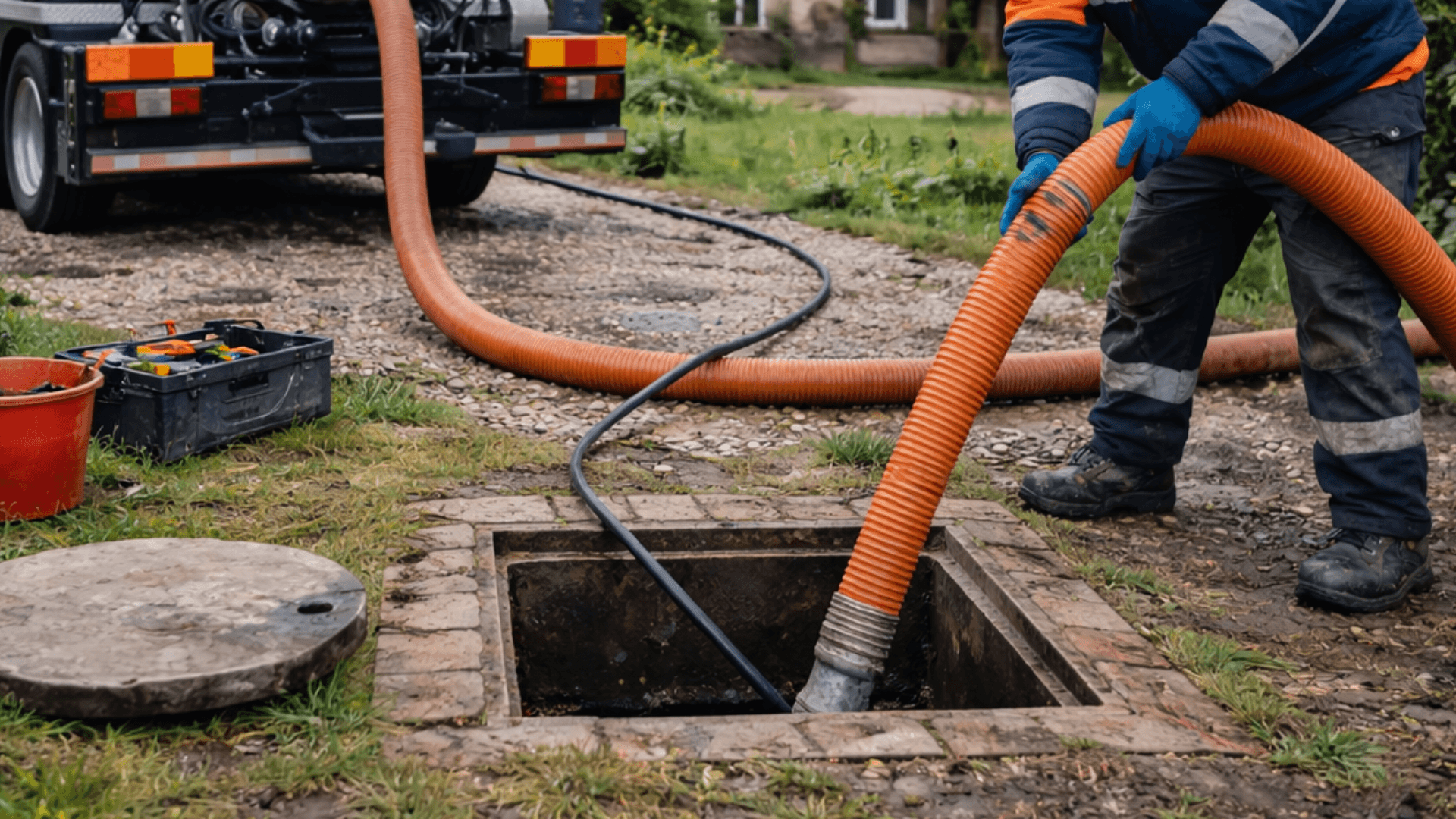
Cesspit emptying: planning ahead prevents dangerous overflows.
What Affects Cesspit Emptying Cost?
Costs usually vary based on tank access, how deep the tank is, the approximate volume currently stored, and how urgent the booking is. In some cases, additional equipment may be required for safe extraction.
How Often Should a Cesspit Be Emptied?
There is no universal schedule. Emptying frequency depends on household or site usage and how quickly the tank fills. Some properties need short intervals, especially if usage is heavy or the tank fills faster than expected.
Warning Signs of an Overdue Cesspit
Look for slow drainage, gurgling toilets, strong odours near the tank area, or noticeable changes in how quickly it reaches capacity.
How to Prevent Overflows
Use (or check) a high-level alarm so you get warning before levels become critical. If your property is busy, schedule emptying ahead of peak usage rather than waiting for the warning signs to become emergencies.
Tank Access and Urgency: Why Cost and Timing Can Vary
Cesspit emptying in Kent is not just a “one-size” service. Your access conditions strongly affect the work involved. If the access point is restricted, the tanker needs careful positioning and safe extraction may require additional time.
Urgency also changes the plan. Emergency situations (when overflow risk is high) may require faster dispatch. That does not change the need for correct safety procedures, it just affects scheduling and the approach used to reduce risk quickly.
Practical Prevention Between Services
- 01Fit (or maintain) a high-level alarm so you get early warning.
- 02Avoid flushing items that build up as solids. Only toilet paper and human waste should go into the system.
- 03Be careful with heavy cleaners and harsh chemicals; they can increase residue and create unpleasant conditions during emptying.
- 04If you have recurring overflows after heavy rainfall, check whether there is any unwanted water entering the cesspit area.
- 05Schedule emptying based on your household/site usage, not just on what you “hope” is enough.
What to Expect During Cesspit Emptying
A typical emptying visit includes accessing the cesspit safely, extracting stored waste using tanker equipment, and then leaving the area as tidy as possible. If there are signs that the cesspit is reaching capacity faster than expected, we can also advise on sensible prevention steps to reduce overflow risk.
For many owners, the key benefit of timely emptying is safety. Overflows can be disruptive, unpleasant and potentially expensive, so planning ahead usually provides better control and less stress.
Cesspit Emptying FAQs (Kent)
How do I know my cesspit is near full?
Common signs include slow drainage, gurgling toilets, unpleasant odours near the tank area and noticeably faster capacity build-up. A high-level alarm is the most reliable warning method.
Do you need special access for the tanker?
We require safe access for the tanker and equipment. If the access route is tight or the parking position is limited, we will assess what is possible and discuss practical options with you before proceeding.
Do you provide waste/service documentation?
Yes. Professional emptying and tanker services are completed with compliant waste handling, and you should receive appropriate job documentation depending on the site requirements.
Preparing for a Cesspit Emptying Visit (So Work is Smoother)
Before the tanker arrives, the most helpful thing you can do is make access as straightforward as possible. Clear a safe path for the engineer to reach the agreed access point, and ensure the area is not blocked by vehicles, bins or obstacles. If you know where the access point is and how deep the tank is, mention this when you call.
If you have installed an alarm, let us know whether it’s currently active and what level it’s reading (for example a warning state vs an emergency state). That information can help dispatch plan the safest approach and reduce delays if the booking is urgent.
- 01Confirm the access route for the tanker and equipment
- 02Make sure the tank area is safe to approach (no trip hazards)
- 03Share any history of overflows, alarms, or recurring rapid-full behaviour
- 04Let us know if the property is occupied or if access to the outside area is limited
If you suspect you are heading towards an overflow, treat it as a timing issue. The earlier you book, the more control you typically have over access, dispatch planning and reducing disruption. Waiting until water is actively backing up can limit options and increase stress for everyone involved.
When you call, describe what you are seeing: slow drainage, gurgling, foul odours, or a sudden change in how fast the tank fills. If you already have an alarm, mention the current state. That information helps our team dispatch the right resources and plan a safer operation.
If access is tricky, it helps to tell us the real situation (where you can park the tanker, whether there is a narrow path to the access point, and any restrictions on the site). That way, the team can plan what to bring and how to work safely. It also reduces the chance of delays or the need to reschedule once the tanker is already en route.
After the emptying, prevention matters. The goal is to stop your cesspit from reaching capacity unexpectedly. That typically means using the alarm consistently, scheduling emptying based on household/site usage, and avoiding solid build-up that can speed up filling. When these habits are in place, overflow risk drops significantly.
If you have frequent “near overflow” moments, ask the team about improving your schedule and whether additional site checks are worthwhile. For example, some owners notice that the tank fills faster after certain weather conditions, which can mean surface water or other unwanted inflows are contributing. Addressing that can reduce the chances of emergency call-outs.
A useful mindset is to treat alarms and warning signs as a planning tool, not a last-minute emergency. When you notice the tank reaching warning levels again (even if it does not overflow yet), book sooner rather than assuming it will be fine. That gives dispatch more time to arrange safe tanker access, ensures the team has the right equipment ready, and reduces the chance you end up with an urgent call-out that is harder to schedule. Over time, a more predictable service rhythm usually lowers both stress and cost.
If your cesspit is near capacity, avoid making lifestyle changes that increase solids suddenly (for example large events or heavy guest usage). A small reduction can help the system stabilise while the booking is confirmed and arranged.
If you are unsure, book early so the team can plan safely.
What Happens When You Book Cesspit Emptying?
A tanker visit includes safe access to the tank and extraction of stored waste. After the visit, you can get advice on how to reduce future overflow risk. For full details, visit Cesspit Emptying.
Final Takeaway
Cesspit overflows are preventable. Planning around access, warning signs and proper alarms helps you avoid disruption and emergency call-outs.