
Is your dishwasher not draining? Learn the common causes, safe quick fixes, how to drain a dishwasher that won't drain, and when the issue may be with your external drains.
A dishwasher not draining is one of those household problems that quickly turns from annoying to disruptive. You open the door expecting clean plates and instead find standing water, a bad smell, or food debris sitting in the bottom of the machine. In many cases, the cause is simple: a clogged filter, kinked hose, blocked waste connection, or something caught near the pump. Sometimes, though, the dishwasher is only the first place you notice a bigger drainage issue.
This guide explains how to drain a dishwasher that won't drain, the common faults homeowners can check safely, and the signs that the problem may be with your sink waste pipe, kitchen drain, or external drainage system.
.jpg&w=3840&q=75&dpl=dpl_FteWn2URQBo4Jwa4S4CfgcArYgcB)
Dishwasher drainage problems often start at the filter, hose, sink waste, or shared kitchen drain.
Why Is My Dishwasher Not Draining?
Most dishwashers drain by pumping wastewater through a hose connected to the sink waste, waste disposal unit, standpipe, or nearby plumbing. If any part of that route is restricted, water can sit in the base of the appliance. The fault may be inside the dishwasher, at the connection under the sink, or further along the drain line.
The most common causes include a dirty dishwasher filter, a blocked drain hose, a clogged sink trap, a stuck pump impeller, food waste in the sump, or a wider blockage in the household drainage system. Grease, fat, coffee grounds, rice, pasta, and small food scraps can build up slowly until the dishwasher has nowhere to send the water.
How to Drain a Dishwasher That Won't Drain
Before checking anything, switch the dishwasher off at the mains. If there is standing water inside, place towels around the base of the appliance and use a cup, jug, or sponge to remove as much water as possible. This makes it safer and easier to inspect the filter and sump area.
- 01Remove the bottom rack so you can access the base of the dishwasher.
- 02Lift out the filter assembly, usually found in the centre or rear of the base.
- 03Rinse the filter under warm water and gently scrub away grease or food debris.
- 04Check the sump area beneath the filter for glass, labels, bones, seeds, or hardened food.
- 05Refit the filter securely before running a short rinse or drain cycle.
If the dishwasher drains after cleaning the filter, the issue may have been a straightforward internal blockage. If water remains, or the machine drains slowly and then backs up again, continue with the checks below.
Check the Filter, Sump, and Drain Hose
A blocked filter is one of the easiest problems to fix and one of the most common reasons for a dishwasher not draining. Even when the filter looks clean from above, debris can sit in the sump area below it. Check carefully, but avoid forcing your hand into sharp or hidden areas because broken glass is a common culprit.
The drain hose carries wastewater from the dishwasher to the plumbing under the sink or to a dedicated waste connection. If it is kinked, crushed, blocked, or incorrectly positioned, the dishwasher may struggle to empty.
- 01Look behind or beside the appliance for a visible kink in the hose.
- 02Check that the hose has not been trapped after the dishwasher was pushed back into place.
- 03Inspect the connection under the sink for sludge, grease, or food debris.
- 04Make sure the hose is fitted securely and has not slipped loose.
- 05Avoid disconnecting plumbing unless you are confident, prepared for water spillage, and able to refit it properly.
If the hose connects to a spigot under the sink, that connection can become blocked with grease. This is especially common in busy kitchens where cooking fats and food waste enter the sink. A dishwasher may appear faulty when the real issue is a blocked waste connection.
Check the Sink and Kitchen Waste
Your dishwasher and kitchen sink often share the same drainage route. If your sink is also slow to empty, gurgling, smelling, or backing up when the dishwasher runs, the problem is less likely to be the appliance itself. It may be a blockage in the sink trap, waste pipe, or drain outside the property.
Run the kitchen tap and watch how quickly the sink drains. Listen for bubbling or gurgling from the plughole. If water rises in the sink when the dishwasher pumps out, that points towards a drainage restriction beyond the dishwasher. In this situation, repeatedly running the dishwasher may make the mess worse.
Could It Be the Pump?
Dishwashers use a pump to push wastewater out of the machine. If the pump is blocked or failing, you may hear a humming noise, unusual grinding, or repeated attempts to drain without much water movement. Pump problems are usually an appliance repair issue, not a drainage issue.
However, a pump may also struggle if it is trying to push water into a blocked waste pipe. If the dishwasher has been checked by an engineer and no internal fault is found, the next step is to inspect the drainage route.
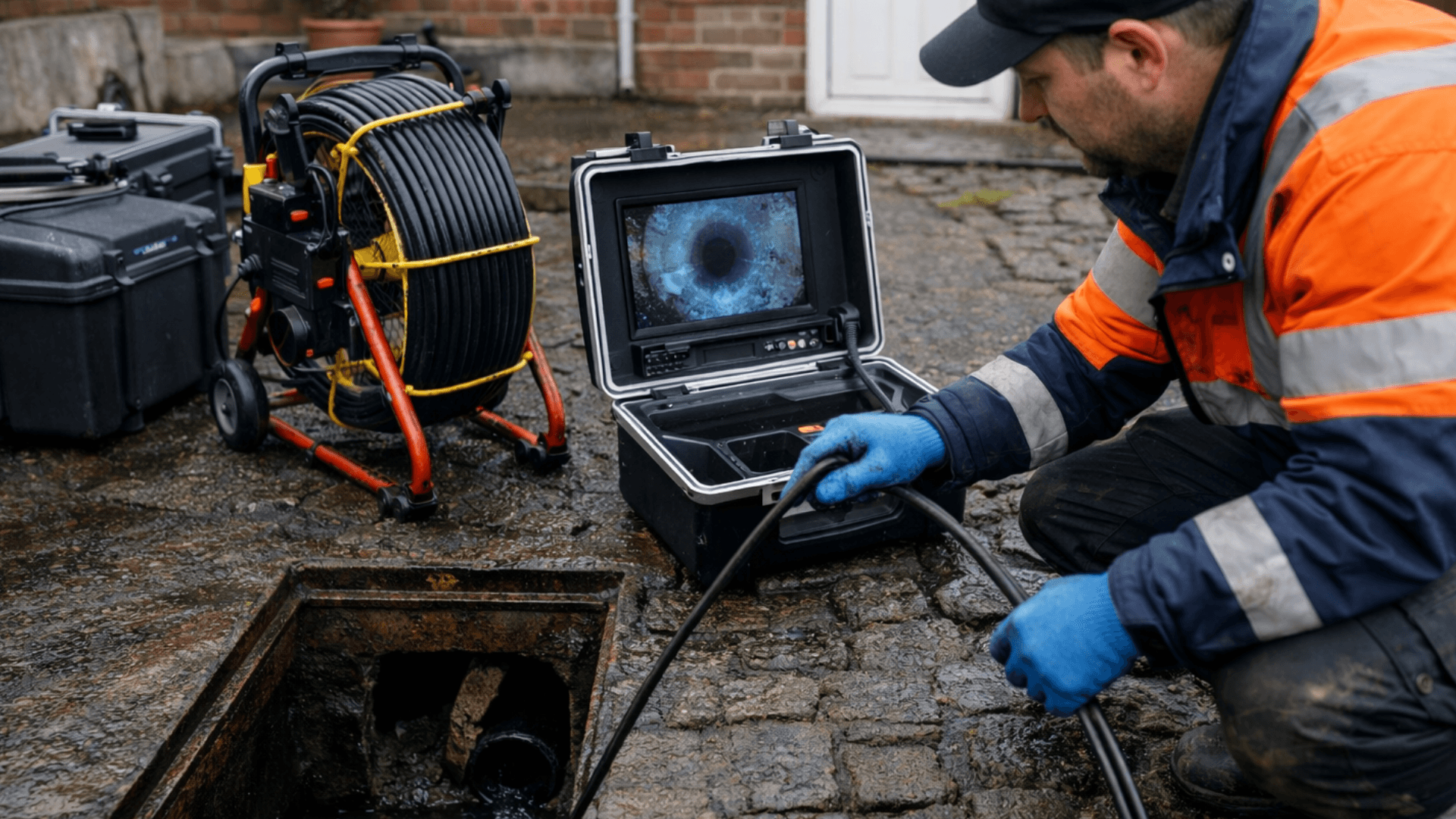
A CCTV survey can confirm whether recurring dishwasher drainage problems are part of a wider issue.
When It Is Actually a Drainage Problem
A dishwasher not draining can be an early warning sign of a wider blockage. Kitchen drainage is vulnerable because fats, oils, sauces, starches, and detergent residue can cling to pipe walls. Over time, the internal diameter narrows and wastewater from appliances has less space to flow away.
Signs the Issue May Be Outside the Dishwasher
- 01The kitchen sink drains slowly or smells unpleasant.
- 02Water comes back up into the sink when the dishwasher drains.
- 03You hear gurgling from plugholes or nearby waste pipes.
- 04The washing machine or other appliances are also draining poorly.
- 05The problem returns soon after cleaning the dishwasher filter.
- 06There are wet patches, bad smells, or overflowing gullies outside.
If several of these symptoms are present, a drain specialist is the right call. Clearing the dishwasher filter will not solve a blockage sitting further down the kitchen waste line or underground drainage. Professional equipment can locate and clear the obstruction without guesswork.
Quick Fixes Homeowners Can Try
For a first-time issue, clean the filter, remove visible debris, check the hose for kinks, and make sure the sink waste is flowing normally. You can also run a hot wash with a suitable dishwasher cleaner if the machine is draining partially and the manufacturer's instructions allow it.
Avoid pouring harsh chemical drain cleaners into the dishwasher or sink waste. They can damage seals, pipework, and appliance components, and they may create a hazard if a professional later needs to dismantle or jet the line. If the blockage is caused by grease further along the pipe, chemicals often provide only temporary relief.
When to Call a Professional
Call a professional if the dishwasher repeatedly fails to drain, the sink backs up, bad smells are coming from the waste, or water is appearing outside around gullies and drains. You should also stop using the appliance if water is leaking, electrics may be affected, or the machine makes unusual noises during the drain cycle.
Call2Drain can investigate whether the problem is linked to your drainage system. Our team can clear blockages, flush kitchen waste lines, and use CCTV drain survey equipment where the cause is hidden or recurring.
For help with a suspected blocked kitchen drain, book our drain unblocking service or call 01892 571 555 to speak to Call2Drain.
Frequently Asked Questions
How do I drain a dishwasher that will not drain?+
Switch it off at the mains, remove standing water with a cup or sponge, clean the filter and sump area, check for visible debris, then refit the filter before trying a short drain or rinse cycle.
What are the most common reasons a dishwasher is not draining?+
Common causes include a clogged filter, blocked sump, kinked hose, blocked sink waste connection, pump issue, or a restriction further along the kitchen drain.
How do I know if it is a drainage problem rather than the dishwasher?+
If the kitchen sink drains slowly, water rises in the sink when the dishwasher pumps out, plugholes gurgle, or external gullies smell or overflow, the issue may be with the drainage system.
When should I call Call2Drain?+
Call if the dishwasher repeatedly fails to drain, the sink backs up, bad smells persist, or you suspect the kitchen waste line or external drain is blocked.