A Kent guide to septic tank emptying intervals: recommended schedules, symptoms of an overdue tank, and what to do next.
If your property is not connected to the mains sewer, you may rely on a septic tank. The most important question is rarely “can you unblock it?” and more often “when do we need emptying so it never becomes an emergency?”
This guide covers septic tank emptying in Kent, typical interval guidance, and warning signs that indicate your system needs a tanker visit.
Routine emptying helps prevent blockages, overflows and system failure.
How Often Should a Septic Tank Be Emptied?
For many household systems, emptying is often needed roughly around once per year (sometimes longer depending on household size and usage). The correct interval depends on how much waste the system receives and whether it is draining and treating effectively.
Warning Signs Your Septic Tank Needs Emptying
Common symptoms include slow drainage from bathrooms, gurgling, persistent foul smells, reduced system performance, or signs that solids are building up faster than normal.
What Can Go Wrong Without Emptying?
When sludge and scum build up, the tank can lose capacity and efficiency. That can lead to backups, odours, and problems with the drainage field.
What Happens During a Septic Tank Emptying Visit?
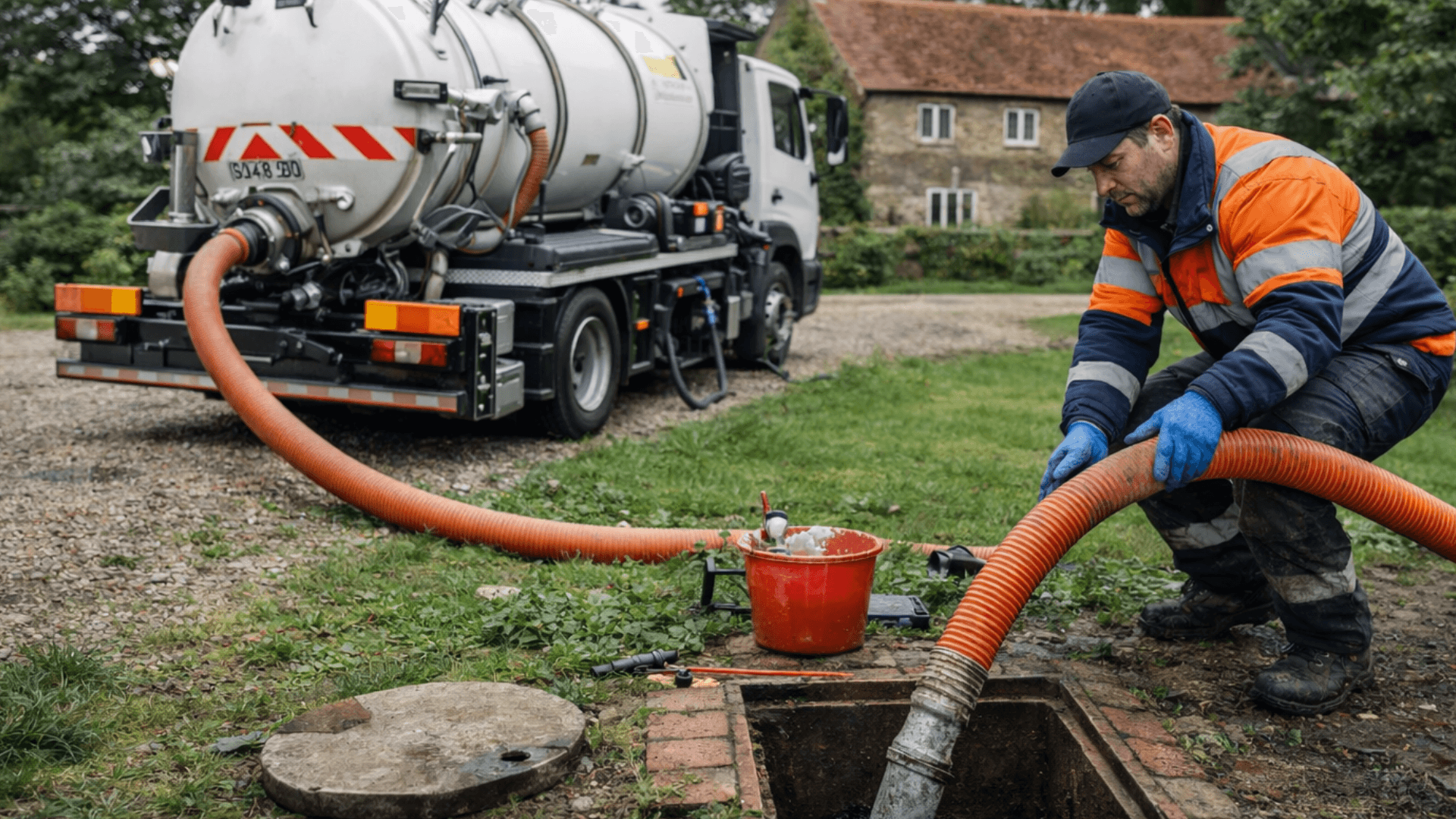
A tanker team typically locates the tank, extracts sludge and scum, then checks the system as part of restoring capacity and reducing risk of overflow. For service details, see Septic Tank Emptying.
What Determines How Often You Need Emptying?
In Kent, septic systems vary a lot by property type and usage. The emptying interval depends on tank size, the rate at which solids accumulate (sludge and scum), and how efficiently the system separates waste inside the tank.
Household behaviour matters too. A larger household, frequent guests, or periods of heavy usage can accelerate the build-up and reduce how long you can safely go between tanker visits.
- 01Tank capacity and how effectively it settles solids
- 02Number of people using the system (and water usage habits)
- 03Signs of solids build-up (slow drainage, odours, or recurring backups)
- 04How the drainage field/soakaway is performing
Signs Your Septic Tank Might Be Overdue (Early Warning)
Don’t wait until something fails. If you notice increasingly slow drainage, more frequent gurgling, persistent foul odours, or waste seems to “disappear” more slowly than usual, that can indicate solids are building up faster than they should.
Another common early signal is changing performance outdoors: wet patches, a strong smell near the drainage area, or a noticeable difference after heavy rainfall (when the system has less capacity to manage flows).
What Not to Put Into a Septic Tank
Septic systems rely on natural biological processes. Avoid flushing harsh chemicals that can disrupt the bacteria that help break waste down. Grease and fats can also contribute to faster residue build-up.
If you’re unsure what may have entered the system recently, tell the engineer when you call. That helps us recommend the most sensible service plan and timing.
Septic Tank Emptying FAQs (Kent)
Do you provide paperwork/records after emptying?
Yes. Professional emptying visits typically include the correct job documentation so you have service records for your property. Keeping this information helps with maintenance planning and future property decisions.
Can a septic system cause drain backups that look like plumbing issues?
It can. Sometimes the symptoms appear like an in-house blockage (gurgling or slow draining), but the root cause is solids overload or issues further along in the system. That’s why diagnosis-first thinking helps avoid repeated temporary fixes.
How do I reduce the chance of overflow between services?
Manage usage during busy periods, avoid introducing harsh chemicals or grease, and book emptying proactively when warning signs appear. If you want to understand best-practice scheduling for your exact situation, speak to our team about recommended intervals.
What to Do Between Tank Services (Practical Prevention)
After a septic tank emptying visit, prevention is about keeping the system stable. That means avoiding heavy chemical cleaning agents and being careful with what goes down sinks and toilets. Even if a tank is emptied recently, harsh inputs can increase sludge build-up again faster than expected.
It also means paying attention to how the system behaves outdoors. If you notice slow drainage in sinks and toilets together with persistent odours around the drainage field, that can indicate that more than simple emptying may be required. In those cases, a diagnosis call can prevent the next failure.
- 01Do not dispose of grease or fats into the system (FOG accelerates residue build-up).
- 02Avoid flushing non-waste items and limit harsh cleaners where possible.
- 03Be mindful of heavy usage periods (parties, guest stays, commercial turnover).
- 04Keep an eye out for wet patches, odours, and reduced drainage performance around the field/soakaway.
How We Assess the System During a Tank Emptying Visit
During an emptying visit, our team typically locates the tank, confirms access conditions, and extracts stored sludge and scum. We also look for signs that the system is functioning correctly and that capacity has been restored. If symptoms suggest that the drainage field may not be performing, we’ll explain what it could mean and what next step options are available.
If you have recurring issues, that is a signal to move beyond emptying alone. A combined approach can include diagnosis for blockages further down the line or planning for repairs where required.
A simple way to reduce risk is to treat emptying as part of a wider routine. That means scheduling around usage, checking performance after heavy rainfall, and monitoring whether toilet/sink drainage returns to normal after a visit. If performance does not fully improve, it usually indicates that something else is affecting system capacity (such as drainage field problems or deeper blockages).
When you call, we can also help you decide the most sensible next step: another emptying visit alone, an additional diagnosis appointment, or a repair plan. That way, you avoid paying for repeated emergency-style responses when the long-term fix would have been cheaper and less disruptive.
If you want a quick rule of thumb: if symptoms return quickly after emptying, focus on diagnosis. If symptoms improve steadily after emptying and only gradually return, routine servicing is likely doing the right job. This is why we always discuss the pattern, not only the immediate problem.
For landlords and property managers, keeping a consistent schedule and service records can reduce tenant disruption and help with maintenance planning. When you can show what was serviced and when, it becomes easier to manage the next visit and avoid reactive emergencies.
If you are unsure whether your symptoms point to the septic tank or a deeper pipe/drain-field issue, think of it this way: emptying helps when the tank is overloaded with solids. If problems continue quickly after emptying, it may be the drainage field or a blockage further along the system. That is where diagnosis can stop you repeating the same emergency routine.
For a smoother booking process, be ready to share access details (where the tanker can park and how you reach the access point). That small preparation step helps reduce appointment delays and improves the chances of completing the right service in one visit.
Booking a little earlier can also give you more dispatch options, particularly during busy periods or after heavy rainfall.
When to Book
If you notice warning signs or you are overdue based on your maintenance history, book your emptying visit early. That is usually cheaper and less disruptive than dealing with an urgent system failure.