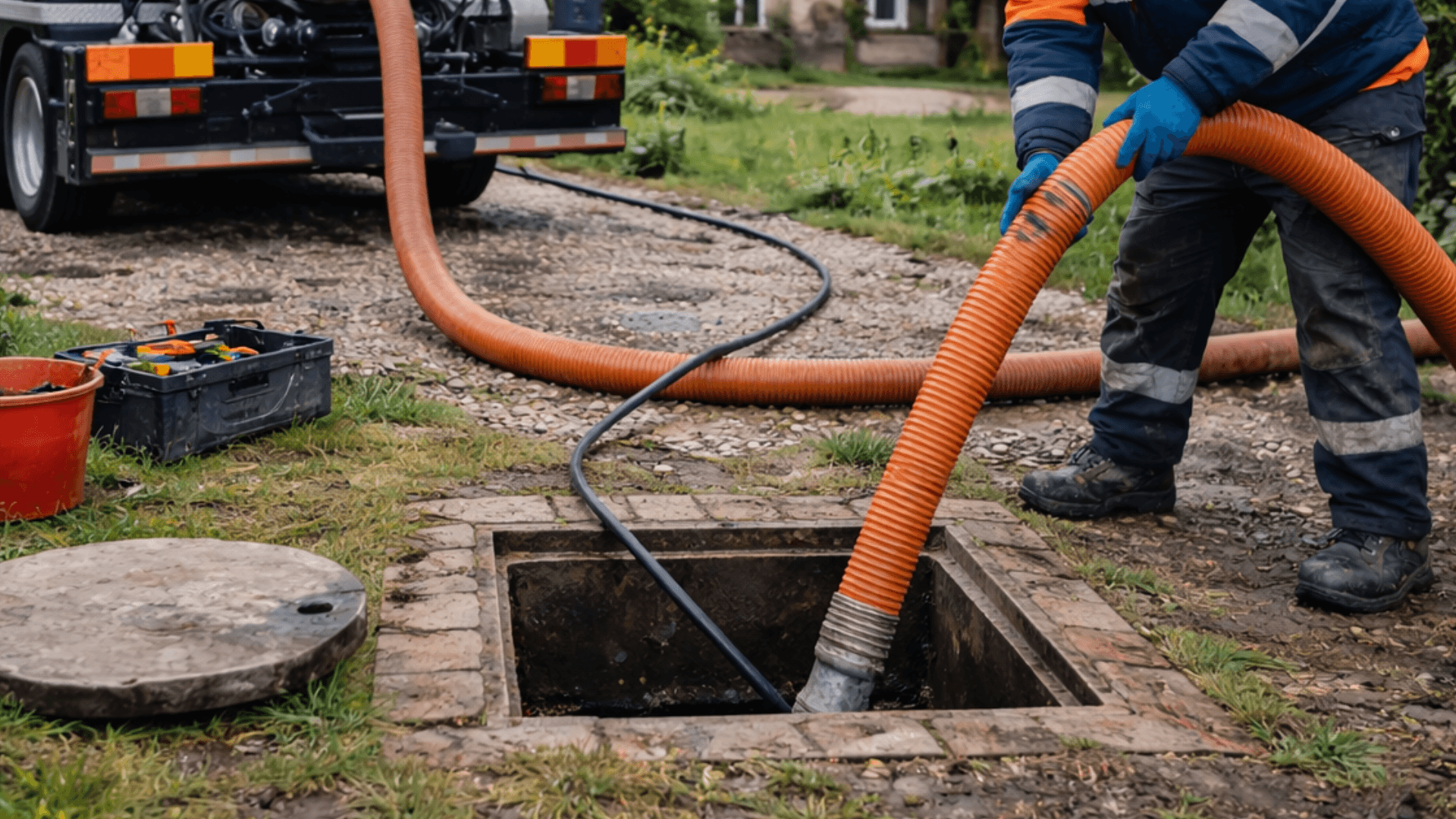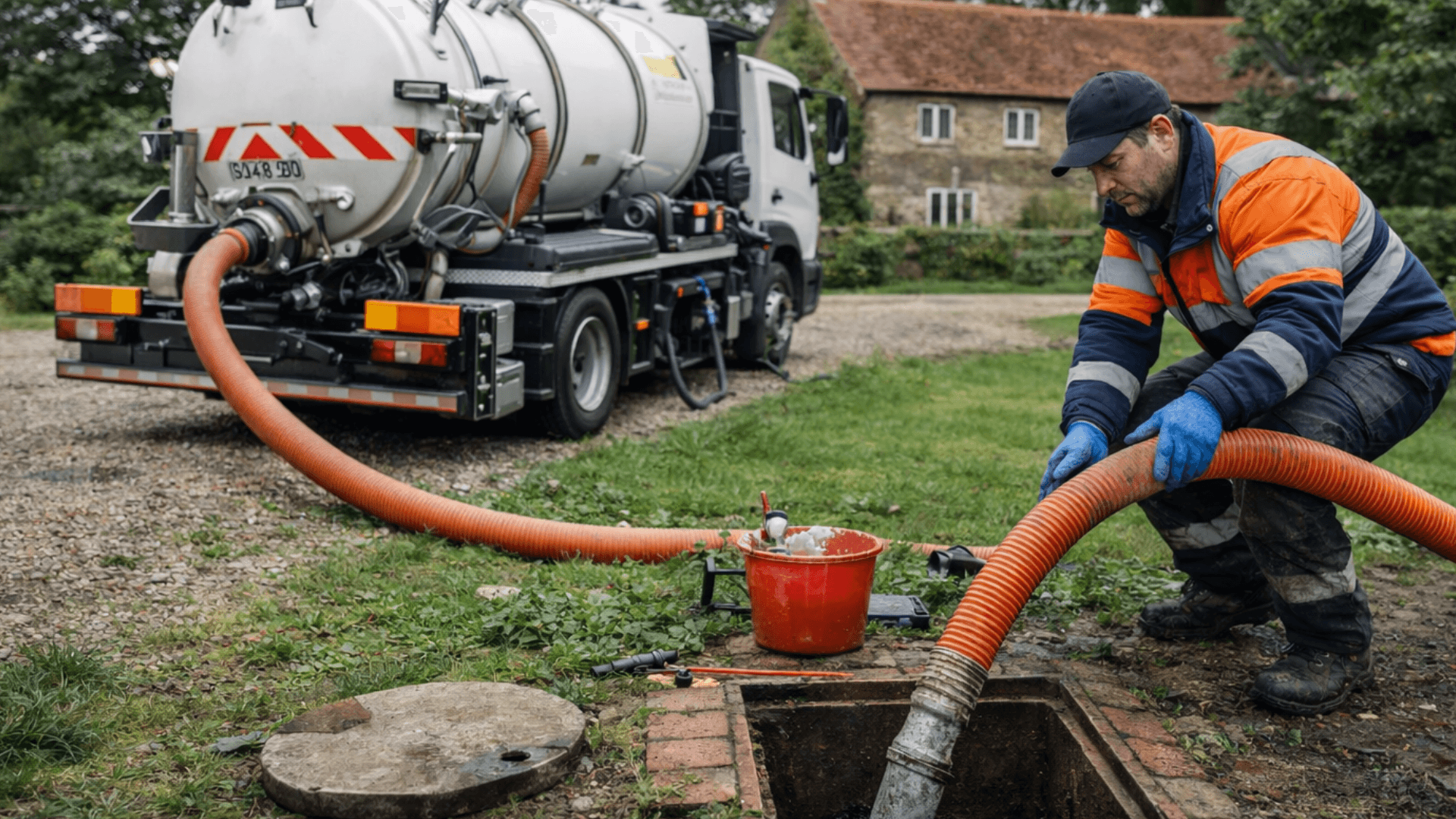
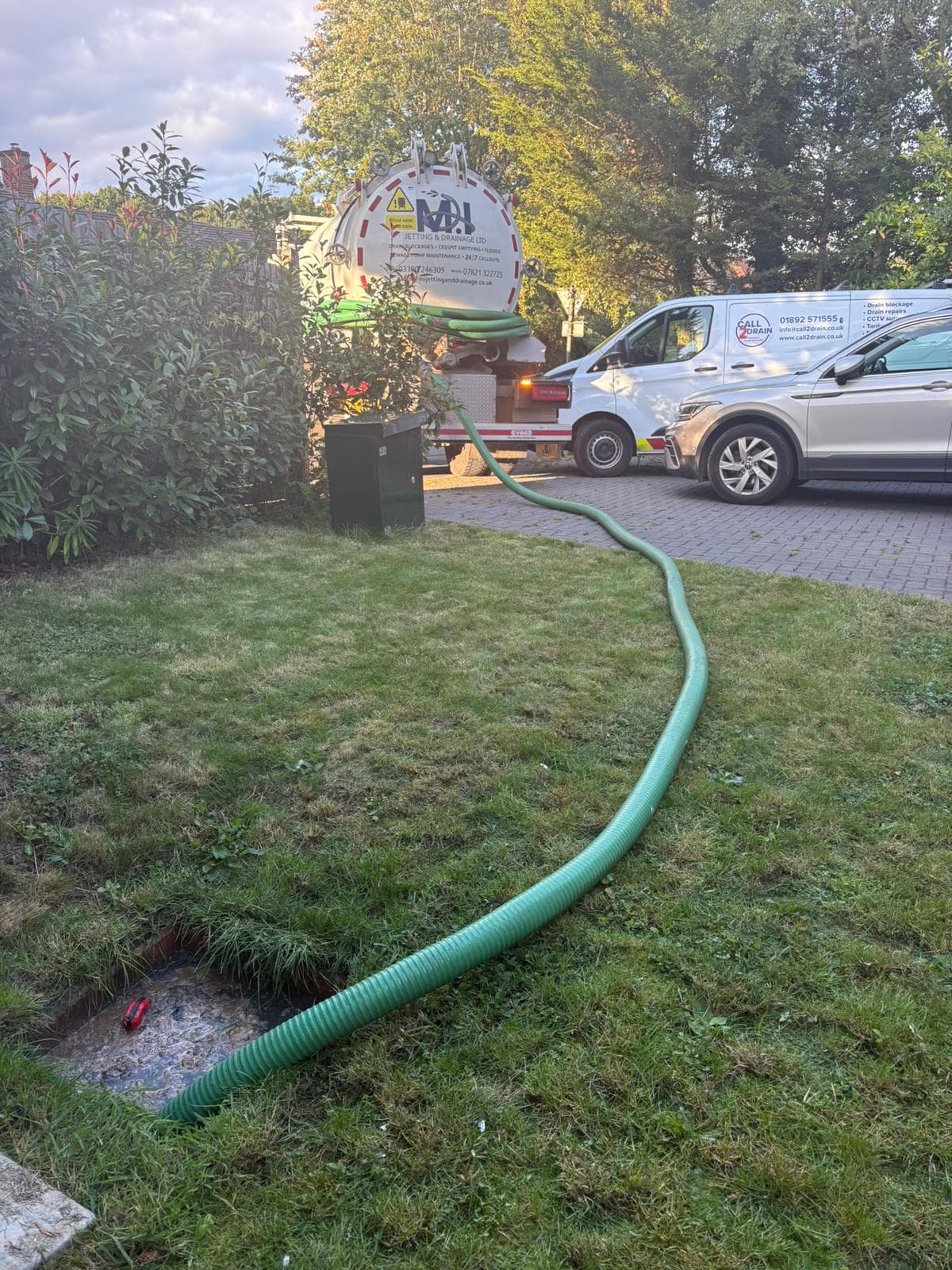
If your property is not connected to the public sewer, you have an off-mains drainage system. Across rural Kent, Surrey and Sussex, that almost always means one of two things: a septic tank or a cesspit.
How A Septic Tank Works
A septic tank is a treatment system. Solids settle to the bottom as sludge. Fats float to the top as scum. The clarified liquid flows out into a soakaway or drainage field. The tank only fills with sludge and scum – typically only needing emptying once a year.
How A Cesspit Works
A cesspit is a sealed holding tank. It does not treat anything and it does not discharge anywhere. Every drop of wastewater stays there until a tanker pumps it out. Much more expensive to run over time.
How To Tell Which One You Have
- Check the documentation.
- Look at the chamber. A septic tank has two chambers with an inlet and outlet. A cesspit has one chamber and inlet only.
- Track the emptying frequency. Every couple of months = cesspit. Once a year = septic tank.
- Ask the tanker company.
Legal Compliance: The General Binding Rules
In England, septic tanks must discharge to a properly functioning drainage field, not directly to a watercourse. If your septic tank discharges to a stream or ditch, it must be upgraded.
Running Costs Compared
- Septic tank empty frequency: typically once a year.
- Cesspit empty frequency: every few weeks to months.
- Annual septic tank running cost: £200-£350.
- Annual cesspit running cost: often £1,000+.
Essential Maintenance For Both
- Avoid harsh chemicals.
- Stick to the Three Ps.
- Keep surface water out.
- Do not park or drive over the tank or drainage field.
- Empty on a schedule.
Call Call2Drain
Call 01892 571 555 for off-mains advice.